
First published in CoStar on May 22 2026
Neil Hockin, Joint Managing Director of LM and Chair of Revo’s Asset Management Committee
There’s something quietly limiting about only looking inward, when we consider the future of retail, leisure, and urban placemaking. If the past few years have taught us anything, it’s that innovation rarely respects borders. Yet, as an industry, we can sometimes behave as though it does.
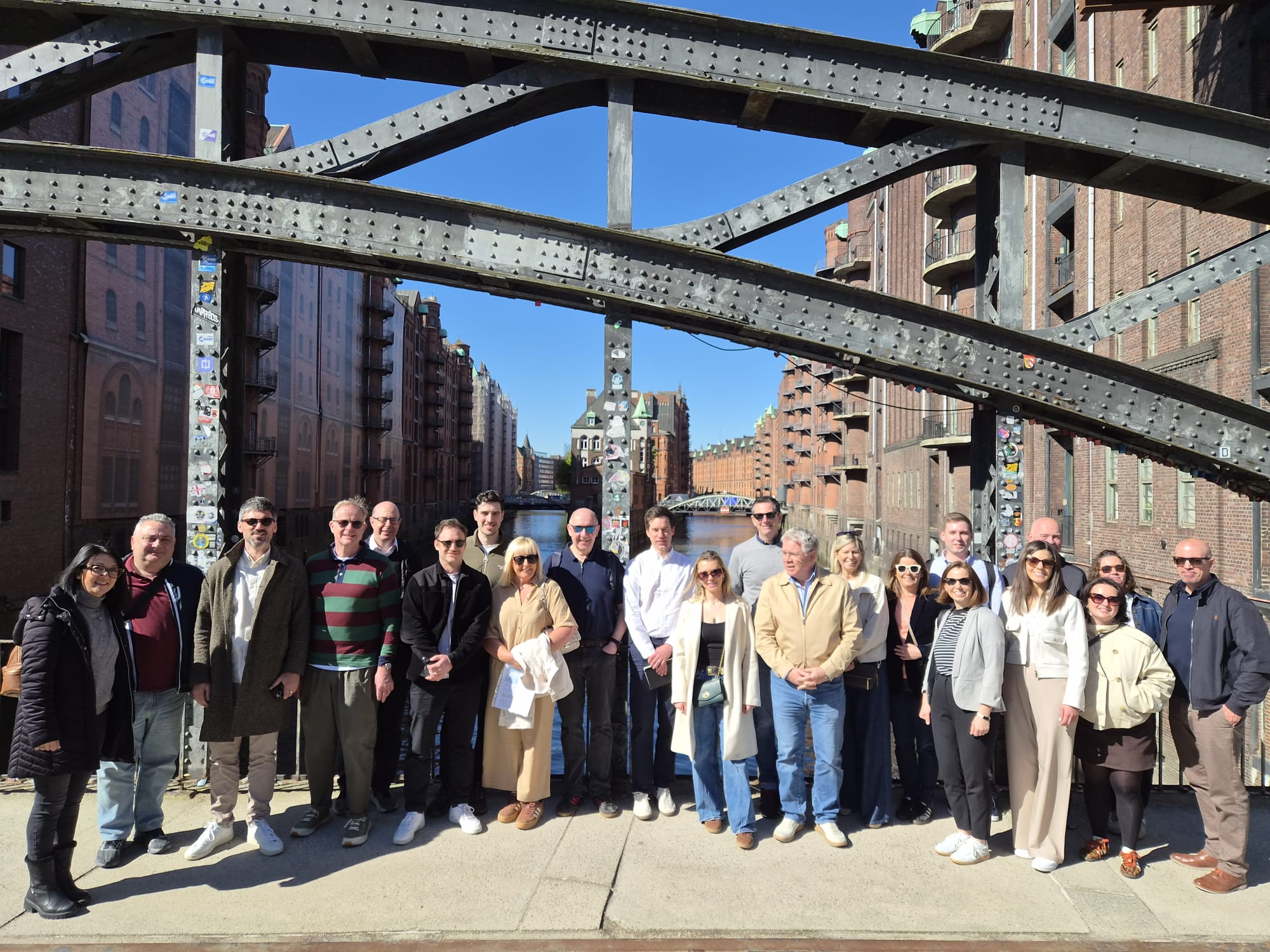
That’s why experiences like Revo’s recent international study tour to Hamburg and Berlin matter so much: they encourage us to lift our gaze and confront just how much is happening beyond our own shores.
What became immediately clear across the three days is that some of the most exciting thinking in the sector isn’t about “retail” at all. It’s about destinations. How do we take a place that feels transactional, and create one that people actively choose to spend time in? Both Hamburg and Berlin are leaning into this with a confidence that feels infectious.
Let’s start with lessons from Hamburg. The regeneration of Hafen City is mind blowing, in both ambition and scale. It has been delivered by a Civic Board looking through a long-term lens, combining living, working, culture, shopping, tourism, dining, leisure, and pretty much everything else a city needs, in Europe’s largest inner-city regeneration project. At the heart of this is URW’s flagship project, Westfield Hamburg Überseequartier.
Anna Laura Riemann of URW was keen to stress that it is not a shopping centre, but retail, leisure, living, and working reimagined at city scale: integrated, experiential, and unapologetically ambitious. Amazing architecture has created unique zones, matched seamlessly to a well-crafted tenant mix combing high street staples and unique brands, supported by an array of leisure and restaurant operators. That’s a benefit of ‘newness’, but there are other things URW are implementing that will ensure it stands the test of time.
Every occupier has had to think hard about fitout, the 100,000 sq ft Zara and a truly unique Lego Discovery Centre are great examples of why that can never be underestimated. Add in residential, waterfront offices, and even a cruise terminal capable of accommodating 2 ships, and you have a complete offer, that engenders pride of place.
A 20-minute walk away, downtown Hamburg likewise feels prosperous and vibrant, with a different brand mix. Poststraße, Neuer Wall, Jungfernstieg; each location can demonstrate that physical retail still has immense power when it is curated over time, elevated, and woven into the fabric of the city.
Berlin, by contrast, offers a different, but equally compelling, energy. Where Hamburg feels polished and orchestrated, Berlin thrives on creativity, contrast, and reinvention. Its history is omnipresent, however through gradual change, it sometimes feels like it carries a weight on it shoulders; the city core is still finding its identity.
The civic offices, embassies, and museums are success stories, but the historic retail cores in both the East and West of the city mean Berlin does not have the equivalent of an Oxford St / Regent St axis. No centre of gravity could be a problem, or an opportunity.
Over time this will change, and may well be driven by entertainment, unlike Hamburg’s re-energising through retail. Germany’s busiest Casino and Cirque Du Soleil anchor The Playce, and a new Kerb Food Hall sits a few metres away in Das Centre. Kerb provides an interesting mix of local eateries and a great, Moroccan Bab in particular got rave reviews form the tour party. Places with mass appeal, like a casino, have relevance and excitement, but they could exist anywhere. A broad food offer makes sure the area feels truly grounded in its locality, whilst adding dwell time and consumer spend.
The other side of the square leads you to mall of Berlin, three levels of prime retail space in two distinct buildings, divided by an amazing central Square. The recent addition of the Inditex brands will no doubt add to the city centre pull, whilst the 50ft spiral slide made even the seasoned property veterans feel like children again.
West Berlin’s main shopping area, Tauentizienstraße, is dominated by KaDeWe, a proper department store with amazing ranges and unparalleled service. Bikini Berlin is close by: originally a women’s clothing factory, the owners have turned their backs on recognised brands and created a point of difference. A concept mall, with 80% of the operators being unique and local, makes this part of the city feel really ‘Berlin’ in spirit.
East Berlin is undoubtedly edgier, with an enormous range of hospitality. Raucherkneipe bars permit indoor smoking, and with the more eclectic, culture-driven areas like Hackescher Markt and RAW-Gelände, you see a city constantly experimenting. Spaces like Markthalle Neun and Dead Chicken Alley aren’t just tourist landmarks, they’re expressions of community, culture, and entrepreneurship.
Retail in Berlin isn’t static; it’s alive, adaptive, and often delightfully unconventional. What links it back to Hamburg is a willingness to embrace experience as the core driver. This isn’t about adding a café or a piece of public art as an afterthought. It’s about fundamentally rethinking the role of place; blurring the lines between retail, leisure, culture, and civic life. In doing so, they’re responding directly to changing consumer expectations, sustainability pressures, and the simple reality that people now demand more from physical environments. We can sometimes be guilty of losing sight of what a place is for, in search of something exciting. Hamburg and Berlin growth patterns are different. Berlin feels more organic and blends traditional German values with an edgier but still accessible side, reflecting its more recent history. Hamburg is the midst of an unprecedented city centre growth phase, but has managed to retain its identity and charm.
This is where Revo’s role becomes so important. Study tours like this aren’t just trips; they’re catalysts. They challenge assumptions, broaden perspectives, and, perhaps most importantly, influence how people think. Seeing these places first hand has a far greater impact than reading about them ever could. It sparks ideas, provokes questions, and encourages a more ambitious outlook on what the future of retail in the UK can be.
Over three intense days and 72,000 steps, through tours, conversations, and shared experiences, there was a palpable sense of ideas being exchanged and perspectives shifting. That collective learning is powerful, when experienced retail real estate professionals, like the 27 who came to Berlin, allow themselves time to absorb lessons from the world around.
The biggest takeaway is this: if we want to create more exciting, resilient, and relevant retail environments, we must be willing to look outward. Hamburg and Berlin show us what’s possible when cities embrace creativity, invest in experience, and think boldly about place. The challenge now is how we take that inspiration and apply it – thoughtfully and ambitiously – closer to home.